
Top Indian IT services companies - TCS, Infosys, Wipro and HCL Tech - have said that they would continue to hire freshers through campus interviews, though lateral hiring will be mostly on exception basis.
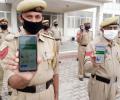
The ministry of home affairs has made the use of Aarogya Setu app mandatory for all employees, both private and public, and pinned the responsibility for compliance on the head of respective organisations.

In total, the Centre plans to purchase around 40.7 million tonnes of wheat from farmers this year, which is almost 19 per cent more than last year.

WhatsApp limited the number of times a frequently forwarded message can be sent further to only one chat at a time. This resulted in 70% plunge in viral forwarded messages globally, WhatsApp told GoI.
The exponential number of downloads can be attributed to a call by Prime Minister Narendra Modi, asking people to have the app on their mobiles, combined with the government's push for downloading of the app through other channels, reports Neha Alawadhi.
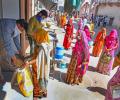
However, experts say that unless clear guidelines are there, it remains to be seen how many people fall within the ambit and who remains excluded.

Given that people have been reluctant to order cooked food - which worsened due to a couple of cases of delivery personnel testing positive for COVID-19 - food delivery platforms have included grocery delivery as part of their services.
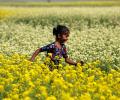
In MP, farmers say sales under new 'Sauda Patrak' method below MSP; Haryana mustard farmers wait for their turn to sell. The annual purchases of major rabi crops in North India largely wheat, mustard and also chana to some extent have been delayed as most cereal mandis were closed in the aftermath of the nationwide coronavirus lockdown.
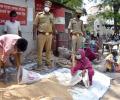
A recent study shows that more than 100 million people are excluded from the public distribution system because the central government insists on using 2011 population figures to calculate state-wise PDS coverage, which effectively leaves out 100 million people, reports Sanjeeb Mukherjee.
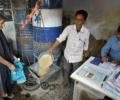
A study by eminent economists, by Jean Drze, Reetika Khera and Meghana Mungikar released few days back shows that more than 100 million people are excluded from the PDS because the central government insists on using 2011 population figures to calculate state-wise coverage under the National Food Security Act.

The stimulus package is expected anytime this week and will be aimed at the urban and rural poor; disadvantaged sections of society; MSMEs and some of the worst-affected sectors.
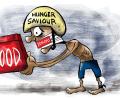
Sources said a merger could benefit both as Grofers' private labels business would be a draw for Zomato, as well as its experience in the online grocery delivery space.
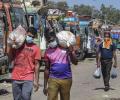
It is likely the government will divide the country into different zones during the proposed extended period of lockdown and might permit a few services to function in safe zones.
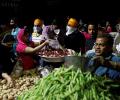
There have been several instances of traders dumping fruits and vegetables outside mandis. Or of farmers dumping produce outside their villages or feeding them to their animals.
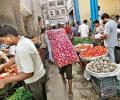
The agriculture ministry, in the last few weeks, issued guidelines and letters to states to ensure agriculture and food products reach consumers in a timely manner, while farmers don't have to come to the mandis to sell them.

'We have to plan for whatever the new normal is.'

'If many start-ups lose in this environment, there will be less number of people willing to start new businesses.'

Over the past week, several unusual partnerships among start-ups, traditional businesses and hospitals have been announced, and several more are likely to materialise soon. The trend could see increased importance of gig workers, who are taking considerable risk to deliver goods to people in the time of a pandemic.

For now, Bounce, Shuttl, Fab Hotels, Instamojo, Zomato, Curefit, and HealthifyMe, among others, are going for salary deductions. Most of the consumer internet start-ups, besides those who are in the grocery delivery, education tech, and video conferencing business, would ultimately lay-off people and cut back salaries.

IMD has said the temperature in April-June across most parts in India is expected to be 0.5-1 degrees Celsius warmer than normal. However, doctors and scientists say they haven't found any direct correlation between the speed of COVID-19 spread and warm weather.
 © 2026 Rediff.com - Advertise with us - Disclaimer - Privacy Policy - Sitemap - Feedback - About us - Terms of use - Grievances